What Is a Planogram, and Why Does it Matter?
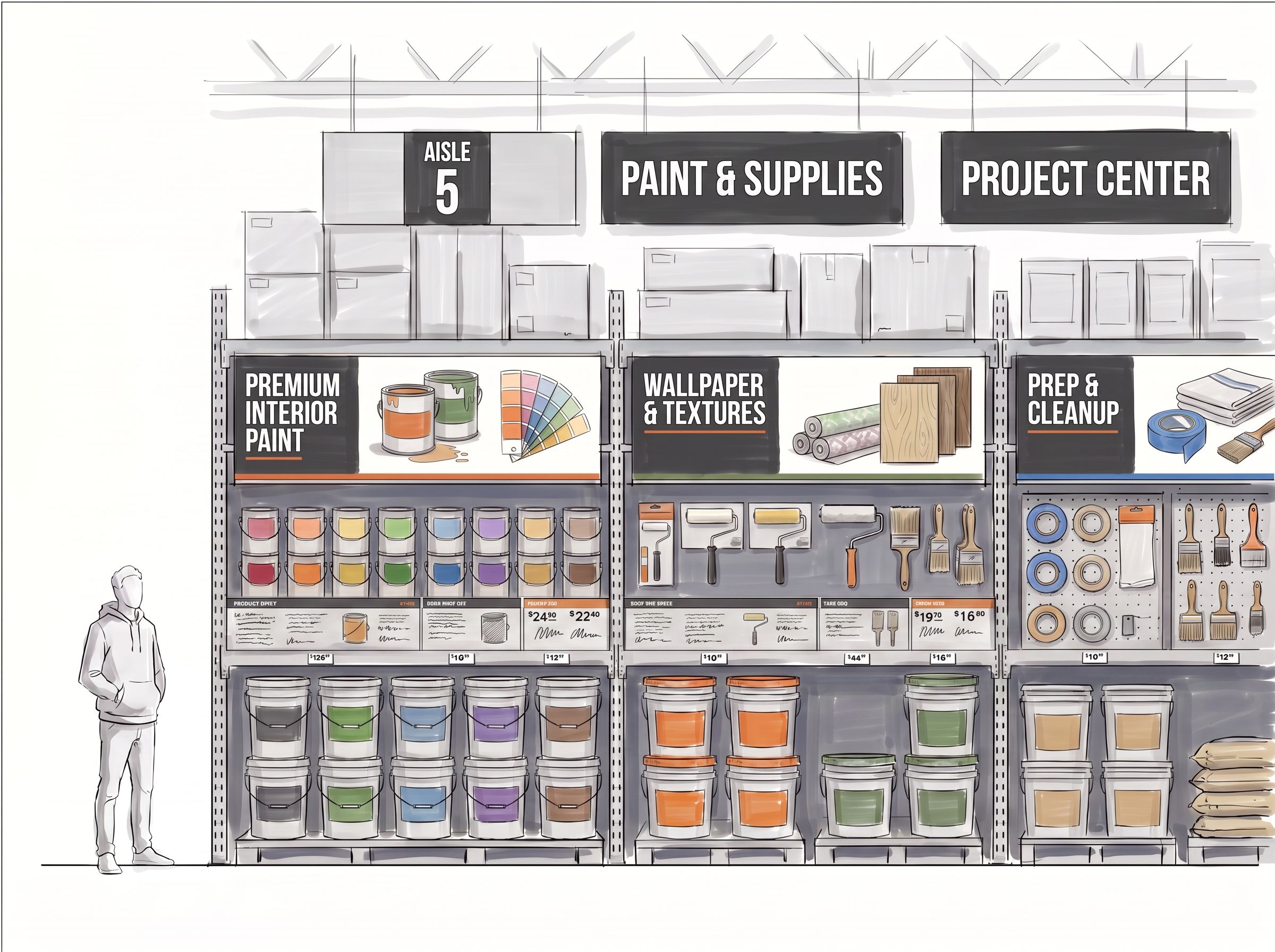
At its simplest, a planogram is just a map. It’s a documented decision about what lives where on a shelf and why. It doesn’t need to be formal or complicated. Even a sketch counts, as long as the decision exists somewhere outside just one person’s head. That’s really the whole point: A planogram takes a placement decision out of someone’s memory and puts it down where a store, a merchant or an entire chain can follow it consistently.
More formally, a planogram – sometimes called a POG – is a diagram that shows exactly where and how products should sit on a shelf. It covers position, number of facings, spacing and order. Planograms matter because they:
- Keep product placement consistent across hundreds or thousands of stores
- Help stores sell more from the exact same amount of shelf space
- Shape how merchants decide which new items get added, and which underperformers get cut
Good design only gets you halfway there. Retailers that do a good job of keeping shelves matched to the plan see it show up directly in the numbers: fewer empty shelves, a more consistent look and stronger profits.
Level One: The SKU
At the SKU level, a planogram answers one question: Does this product earn its spot, and how much space should it get? Retailers look at how fast a product actually sells off the shelf, how much profit it makes per facing, how efficiently it’s packaged and whether it fills a real gap in the lineup.
For suppliers, this is where the basics matter most. Keep track of how your products are actually selling in stores, not just how much you’re shipping to the distribution center. If one of your products is selling slower than the ones next to it, that’s a conversation you want to start before the retailer starts it for you.
Level Two: The Bay
A bay is where single products stop being just items and start telling a story. Strong planning at the bay level usually includes:
- Grouping products by brand, then by type or use, so shoppers can scan quickly
- Putting the fastest-selling or highest-profit items at eye level
More retailers are now planning bays around the project a shopper is working on, not just around individual products. A brand that pitches ideas for the whole bay, not just more space for its own items, earns more trust as a partner instead of just another vendor.
Level Three: The Store
Store-level planograms map out departments, aisles and fixtures across the entire store. This is about how shoppers move through the space: where seasonal sections appear, how Pro areas connect to contractor entrances, and where endcaps and quarter pallets are positioned along the shopper’s path.
Brands rarely get a say in how a whole store is laid out. But understanding it still helps. A product that relies on impulse buys will perform very differently near a busy main aisle than it will tucked at the quiet end of an aisle.
Planograms Are Part of a Bigger Cadence
Planograms don’t live in isolation. They typically ride alongside a broader merchandising plan that a dealer or retailer partner refreshes on a regular cycle, often twice a year. That plan usually bundles four things together:
- Product recommendations
- Planograms
- Point-of-purchase (POP) signs
- Display kits
The cycle works best when it runs both directions. Dealers and store teams share what worked, what didn’t and what they want more of, and that feedback shapes the next round of planograms and merchandising support. Brands that treat this as an ongoing conversation instead of a one-and-done reset earn more consideration the next time space opens up.
How Brands Can Influence the Conversation
- Bring clear, up-to-date sales data to every conversation, not just during a Product Line Review (PLR).
- Suggest ways to group products in the bay, don’t just ask for more facings.
- Design packaging that works hard on the shelf to make efficient use of space, with special attention on the packaging’s front edges and messaging that’s easy to read at a glance.
- Support good execution in stores with simple and clear POP materials.
Planogram resets and PLRs often happen together. Brands that show up to a PLR with real ideas about the planogram and not just a pitch for their product tend to walk away with a stronger position.
Porchlight’s Perspective
A planogram is where strategy turns into what happens on the shelf. Winning at the SKU level starts with clean data and packaging that earns its space. Winning at the bay level means thinking like a merchant, not just a vendor. And understanding the store level helps you ask for the right space, in the right part of the store, for the right reason.
If you want help building a stronger planogram strategy for your next reset or PLR, we would love to help.